
You might think that AI is useful. Maybe you’re right. Or maybe you have already been conditioned to a predisposed assumption, even a conviction, that AI is the solution to some, perhaps even all, of our problems. That it’s just a matter of time and tweaks.
In that case, I’d have to break Rule #1 of my own (revised) list of no-no things to do in blogging: “Don’t Insult Your Own Audience”.
What I’m trying to say is that you’re an idiot.
First off, I’m going to repeat myself: no machine can ever gain self-awareness or magically just have a soul.
It is not possible, however much you wish it, no matter how many movies you’ve seen, no matter what you’ve read, and no matter who says what on YouTube, for truly intelligent and aware machines to ever exist.
Does this upset you, this outlandish absolutist statement from a lowly layperson who once thought a motherboard was a reference to equipment for middle-aged female surfers?
Or perhaps you, like I do, have the advantage of distance and uninvolved perspective, and can see what developers do not? Do we share some measure, you and I, of trepidation, even fear, of what horrors can, and even have already, come from AI usage?
Then you may be even more widely read than myself about the subject.
If so, I offer you this praise: you’re nobody’s fool.
You maintain perspective and cannot be swayed by leading articles which hail artificial intelligence as the greatest invention of all time, humanity’s pinnacle of accomplishment. Because you know that’s not true. And you know, more than most, that like everything else humans have “created” or discovered, it will be used for evil, exploitation, war, greed and the ruin of countries by other countries.
It has already been in development for all of these things, and hackers, traffickers and spies are, and have been, calling for more of this deadly tech.
As it stands right now, I contend that beyond rudimentary applications, AI is useless or worse, especially when it produces anything that is released to the public or a community such as certain science disciplines, most notably without oversight.
Already misinformation has been disseminated by AI, and at present we cannot determine how much material is out there. In 2020, during the height of the pandemic and attendant lockdown, Microsoft and others laid off or fired thousands of workers. Working from home was great, but the articles and testimonials about and by people allowed that luxury eclipsed an ugly truth: millions lost their jobs. Some, we knew, were in the service or hospitality industry: waiters had no one to serve in closed restaurants. Bartenders, line cooks, master chefs, store owners and employees not deemed “critical”, and scores of others watched helplessly their way of life and their careers vanish forever. Businesses failed. Did they know, that last night they locked up and turned out the lights, that it was the end?
In the quiet that followed, late night talk shows broadcast from the host’s homes in a surreal spot of history that too many have already forgotten, so traumatized were they. Buried memories, covered over by whatever was convenient or necessary until now, a mere three years later, it might never have happened at all.
Except it did.
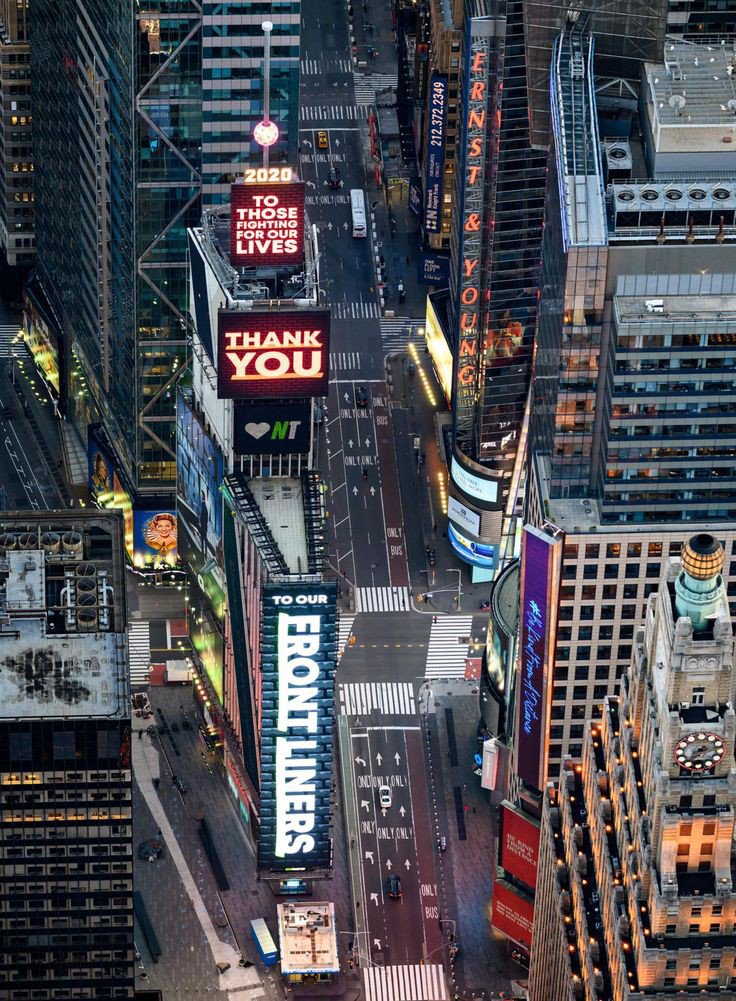
Millions died. A camera facing Times Square showed traffic sawhorses and nothing else, an image of post-apocalyptic, dystopian emptiness none should ever forget.
Empty chairs at the dinner table, in the living room, the nursing homes…and the empty beds to match.
Traffic, non-existent on rural and suburban streets: at night, so quiet that one felt, not peace, but only a creepiness, a sadness, despair: was this the end? Or how the end starts?
No one knew.
In places, the deniers: restaurants remained open. Spring Break in Florida. Reports of outbreaks squelched, or at least padded, by denial specialists and some news outlets who would go on to scoff at or darkly warn against vaccinations. None of it stopped people from dying, or from surviving, but with long-term effects.
Amid this horrific and tragic setting: MSNBC’s Morning Joe. Every day, the death count. Always there, on the right side of the screen. Every morning, a new total. You couldn’t look away. That intrepid crew never was known for pulling punches. Creds for that.
And then there was Trump, who, after screwing up and making psychotic statements, or, more exactly, spewing shit that got people killed because they trusted him, managed a fait accompli:
With most of his damage already done, with enough disinformation and confusion among the people, he “tried to be helpful”, but merely showed his deplorable ignorance and his need to control his team of experts, whom he often contradicted or even berated in press conferences. He actually, without any refinement attempted, suggested that bodies be opened to accommodate UV light devices and, worse, that products like Mr. Clean be used for clearing lung infections. No one in modern history has ever heard a US president say anything quite like that, but no matter. People apparently tried his “cure” suggestions. How many is not known. That even one person tried it is sickening.
And this is exactly where today’s post becomes relevant.
In the midst of Covid-19, Microsoft — MSN– got rid of its reporting staff, or most of it.
What stood in their shoes?
This did. And it isn’t funny. Imagine why; if you’re human, it shouldn’t be hard.
The article in the link is scary, but humans have been replaced by machines for decades, so this is nothing new. In Baltimore at the General Motors plant, there had been steady news reports since at least the 70s of robots on the assembly line. It wasn’t a unique case. Welders, painters, it didn’t matter; one by one, the jobs were no longer for humans. People flooded unemployment offices carrying their pink slips, held as delicately as calloused hands could have done, and another Maryland unemployment rate hike hit the news with ice-cold numbers that could never tell newspaper readers or local TV news viewers what it really meant. Not to those who had once earned a good income and were suddenly facing default on their mortgages. Feeding hungry children who were used to Christmas presents and hot meals faced an abruptly horrible reality of hunger gnawing on stale bread and cut-rate bologna. Marriages ended. There were homicides and suicides. Desperation turned quickly to despair and after despair, there was nothing.
AI is the new assembly line robot. Who dreamed, back in the 60s, that the major changes that happened could even be possible? That then, at the beginning of a career, that Westinghouse, the Bell system, General Electric, General Motors and other giants would fail, automate, or break up?
Jobs were never guaranteed for life unless you were a Supreme Court Justice. But most offered steady, union represented, honorable work. And if that’s been torn down over the decades since, mainly because of politics and its dirty-secret bed companion, the economy, then there is much more to follow. This is compounded by AI, which has its unshakable place cemented in the future like global warming has.
And both are deeply complicated subjects, which works well for tech corporations and politicians, but not for us, whether you once thought motherboards were oceanic wave gliders for MILFs or not. While the rich, powerful owners of this world think we’re still down here dropping simian feces, we’re still the only ones who get the final say, and we’re dangerously close to giving it up. We vote. We pay. We decide which is real, and which is gorilla shit.
When an AI writes about places to visit, and includes an entry on a food bank and suggests visiting it on an empty stomach, that is gorilla shit. It begs the question of how much more gorilla shit is out there, and has been since 2020.
It’s your move.
But know this:
Generations alive now have lived in some kind of terror all our lives.
The Cold War paralyzed us with daily fear that at any second, all that we know and love could be vaporized.
The AIDS epidemic made sexual contact a haunting thing. It could somehow go undetected for years. Nobody knew if they had it or not, despite early perception that it was a “gay” disease only “degenerate men” got. Then the truth was discovered. It was an everyone disease, and it killed.
9/11/01 brought a new kind of terror to the United States: there was no target, no place, no building anywhere that could truly be protected, and the world had become more sinister and dangerous than we ever dreamed.
Mass shootings haven’t let up. Kids who should be worrying about nothing more scary than report cards or being rejected by a crush have to go to school not knowing if they’ll live to see home again.
Covid-19 has shown us true terror of the unknown and the unseen. We lost so much. Grieve so many. There’s PTSD that’s real, damage we cannot repair. We went from using wipes on our groceries to wearing improvised face masks to getting all of the recommended vaccinations and we got rid of Trump. Quietly, President Biden helped us get away from the edge of an abyss. He does not get his due, not even grudgingly.
A call has gone forth from the political right: we don’t deserve a democracy so let’s find a dictator.
A dictator. What a pile of simian feces.
It has all numbed us. Injured us. It’s too much.
And yet, you must hold onto hope that we as a species can overcome. And, Americans, how it all plays out?
That’s entirely up to you.
Register to vote. Buy some hip waders, and be watchful for gorilla shit.
 Memoirs of an American Asshole