
Greek mythology is the most fascinating of all, and it tells us more about Ancient Greece and the modern world than you might believe.
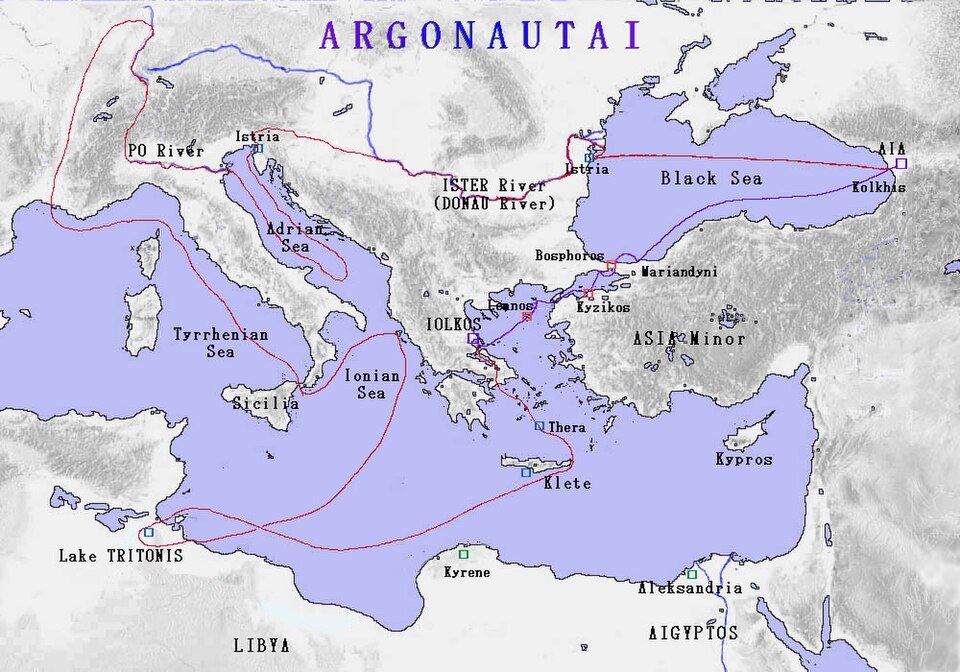
Jason and the Argonauts somehow wound up on the island of Lemnos and found it populated exclusively by women. Jason and his crew stayed for a while, making babies, to repopulate the kingdom, but the story is weirder than that.
The women had been cursed with a foul odor, so that their husbands would not get near them. In retaliation, the women slaughtered every man on the island. That’s cathartic, isn’t it?
This kind of tale, part of the exciting story of Jason, reflects something still deeply embedded in Western society.
I’ll get to that, but let’s join Jason on the first leg of his quest, which was to find and bring back the Golden Fleece. He had to navigate the Bosphorus and enter the Black Sea to do it, and found the fleece in Colchis, or modern Georgia. Pretty neat, considering that one of his crew, the great Herakles, was given two of his Twelve Labors in the region; killing the Stymphalian birds and stealing Queen Hippolyta’s girdle.
Surprisingly, the Greeks (Attica mostly), whose culture held women in a perpetual state of near-servitude, not allowing them to vote, fight or hold political office, the exception being the Oracle of Delphi and other pythia and priestesses in temples, into direct contact with the Scythians of the Steppe.
And Lemnos, in the Argos’s voyage, gets confused with the Scythians because, in what is now Russia and Ukraine, their warriors were men and women.
The voyage of the Argo
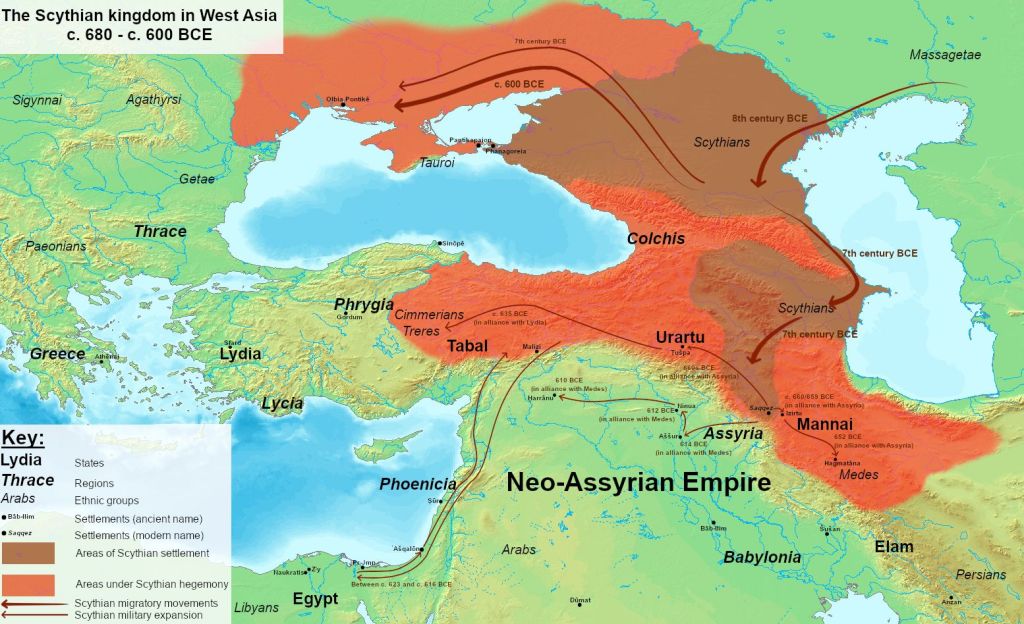
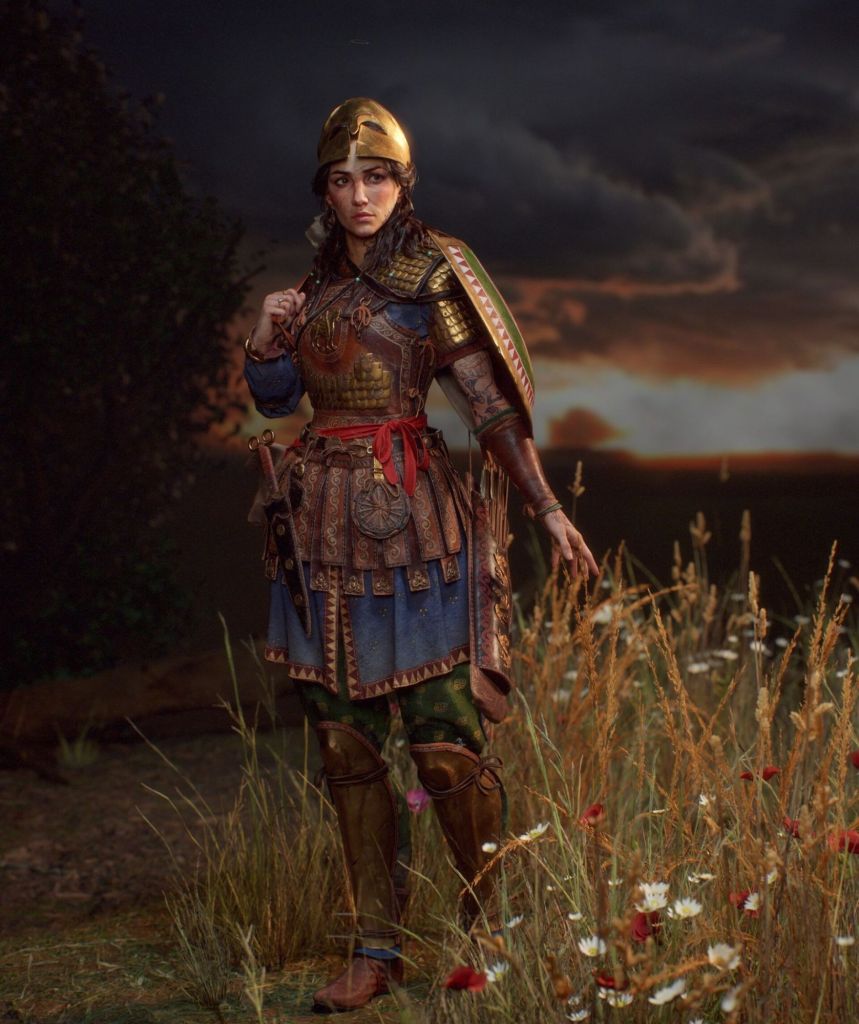
To Greeks, this was bizarre. It was both novel and terrible at the same time, and the Greeks did not like things they couldn’t understand. Considered barbarians, the Scythians drank undiluted wine, which was less common around the Mediterranean. They also allowed women to wear the same armor and arm themselves the same way as men, and they were skilled at mounted archery. That made their armored cavalry very fearsome for that time.
Hippolyta was a woman of some power, or even a queen as the story goes. One of the Labors of Herakles was to take her girdle (probably leather armor worn like a skirt of leather and iron (or bronze) strips hanging from a metal and leather belt of some size as to protect the waist and lower abdomen. Beneath it the women wore pants. Again, if you see this going somewhere, you’re correct.
But as frightened of empowered women as were the Greeks, they sought peaceful trade with the Scythians and despite occasional skirmishes, they got it. Their land was important to Greeks for resources, and there really was gold there. The fleece itself was said to have been soaked in a river and pulled back out, heavily loaded with gold.
At some point, Athens hired Scythians to be unarmed mercenaries, but not the women, only men.
Theseus and Ariadne
Theseus was a son of Poseidon, and as such he was powerful even as a teenager.
On Crete, King Minos, son of Zeus, was aging despite supposedly being immortal. Known as a strong man in his own right, but angry at Athens for the loss of a son, he exacted revenge by demanding male and female teens to be sent to Crete to be sacrificed to the Minotaur.
A very unfortunate tale, the Minotaur had been birthed by Pasiphae, the King’s wife. Cursed by Poseidon, she gained an insatiable lust for a white bull whom Herakles would have to capture; no easy feat.
The craftsman Daedalus was tasked with building a wooden cow, inside of which she could hide. The bull mated with her and the result was the Minotaur. Daedalus also built the labyrinth which was too complex for it to escape, imprisoning it forever.
This does, of course, predate the eruption of the volcano on Thera, known today as Santorini. That means it all happened before 1500-1470 BCE, when Thera erupted, destroying all but a crescent of the island. Herakles as an Argonaut must have come before his Labors.
The sacrifices to the Minotaur angered young Theseus. He schemed, volunteered to be one of the teens for sacrifice, and when he landed on Crete, he challenged Minos to a wrestling match. Of course, both were immortal, but Theseus won, and his prize was the release of the other teens, who were sent back to Athens.
Ariadne was a daughter of Minos and Pasiphae, Medea’s aunt. Medea helped Jason survive the journey of the Argo and eventually they were married.
Thus we come to Ariadne, Medea’s cousin. She fell in love with Theseus, and they sailed from Crete together.
During a stopover on the island of Naxos, Theseus saw her participate in a Dionysian ritual. And if the story weren’t bad enough already, this is worse, since she was helping to tear a man apart and finally passed out from wine and intense frenzy, covered in the man’s blood and organs. Dionysus was the god of wine and revelry, of hedonism and emotional release, anathematic to the other gods. Even Athena, despite what she is depicted as in some pop culture, was a goddess who encouraged moderation, self discipline and morality. But Ariadne’s curse illustrates just how Greeks felt compelled to keep women down, in domestic duties, otherwise their fears might be realized. And Greeks regarded these myths as real history for a time. That made them far more horrible to contemplate.
Theseus sailed from the port of Naxos, leaving Ariadne behind. She yoked him with a death curse. When he sailed into Athens, his ship flew a black sail. He had promised his father that if he survived, he would return with a white sail unfurled. Overcome with grief, his father killed himself (the story there has his father being a mortal, but his son of Poseidon status seems critical to the story of his fight with the Minotaur; therefore the father who died must have been a stepfather. The gods were not renowned for helping to raise children).
Theseus was to become king of Athens, but he was deposed and exiled from the entirety of Attika, two dishonorable things no Greek citizen wanted to face. On the island of Skyros, he was pushed from a cliff to his death.
This is a cautionary tale, one that reinforced the fear of women and their power to retaliate when wronged or angered.
The Takeaway
It gets far worse, the stories contradictory and full of intrigue, but one common theme in all of this is the horrible treatment of women in mythology.
This is how Greek life was. Repression or misogyny, infidelity and debauchery mixed with wars and monsters which gave the history fodder for classic poems and plenty of myths. Even Herodotus wrote things in his historical accounts that had some fairly remarkable elements: the gods themselves killed their own children, tried to kill the children of other gods, and schemed against each other like human siblings. All of it was a nasty business.
Even in Sparta, women were quite repressed. Often most of the men (soldiers trained from childhood) were gone, but the women were forbidden to train or act as soldiers. In one instance they protected the city from an assault by throwing rocks and roof tiles at the attacking force, driving them off. One can surmise that the assault force feared a runner getting out and summoning the formidable Spartan troops; the defending women had bought enough time for it, and besides, they were vicious. This is empowered women, fierce and to be feared. Since I can’t track the source of the story I consider it a myth, like that Spartan Kick in Assassin’s Creed Odyssey made after the film 300.
But no matter where one traveled in the Aegean, there was only one island where women could do what others could not, and that was Lesbos. The ancient world could have done much better with women able to help. This lends a sad aspect of their history and tells us so much about how things are today. Women in Western society are often abused domestically and in public, hired for jobs at a concealed lower pay rate than male counterparts. Their civil rights are being stolen; in some places they never existed as we Westerners think of such things. They are objectified, insulted in public forums like social media, and even their right to health care and privacy are vanishing. You’ll think of the United States first, but it’s everywhere, perhaps not as severe or much worse depending on location, but one thing I can’t get over is that we (the United States) did a terrible thing in Afghanistan.
Girls were allowed to go to school. Women had jobs. Things were good for a while.
Then we just left them. As ISIS and Al-Qaeda resurged because of our gradual troop withdrawal, we just left them. We did the same thing to the Kurds, left them and did so knowing that they were going to die as punishment for their sins and their race .
The wars in Iraq and Afghanistan should never have happened. Fueled by rage after September 11, 2001, our citizens went for revenge, backing George W. Bush with every fibre of our beings and every last essence of our souls. I grieve for the people we left behind, mostly for the women and children. Our odyssey across the sea left the world worse off than if we had never started it.
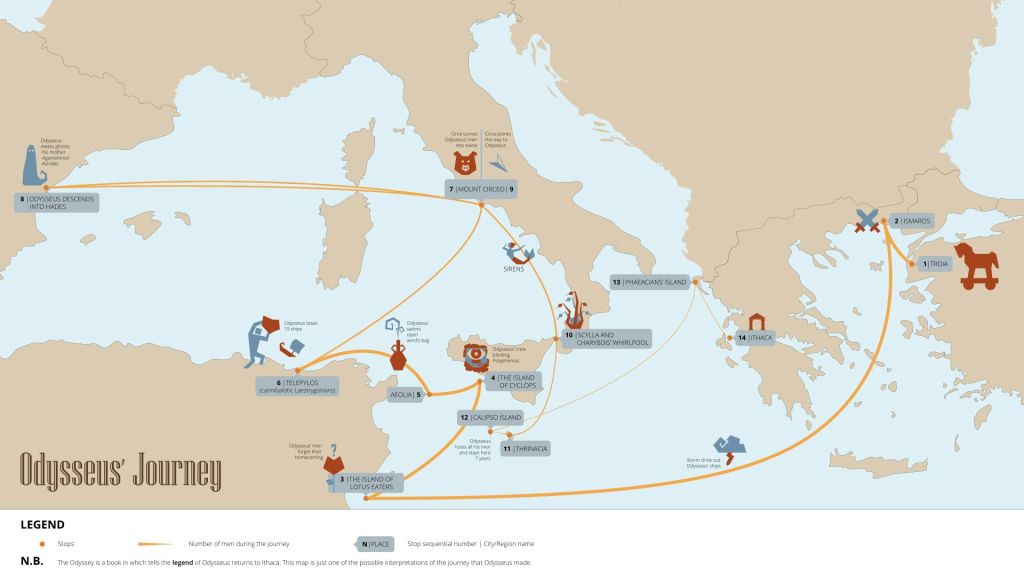
Odysseus
In addition to Jason, Circe also figured into the Odyssey. So do the Sirens and lotus eaters. No wonder he took ten years to get home.
In Popular Culture
In the highly disturbing novel “Ghost Story” by Peter Straub, the people of a fictional New York town somewhere east of Binghamton are seeing scary things, a group of elderly men are having horrible nightmares, and at Elmer Scales’s farm, after an early October snowfall, sheep are found mutilated. And a mysterious woman from out of town has arrived, and two teenagers, Peter and Jim, break into the church across the street from her hotel room to spy on her with binoculars. But what they see (she’s standing by the window in the dark, staring straight at them and smiling) starts them on a path to one’s death and the other’s resolve to fight, leaving him traumatized in ways even I can’t imagine.
People begin to die. The son of one of the group is recruited by them to come from San Francisco and investigate what’s going on. They think he’s an expert on the occult, because of the second book he published, a horror story.
In a way, he really is an expert but won’t admit it. He attended Berkeley and dated a girl of mystery and some penchant for sensuality. When he becomes scared of her, he breaks up. She moves out. Then he hears from his brother in New York City, who has, impossibly, met and become engaged to the same woman. He worries that Don will be jealous. Don Wanderly is not jealous. He’s scared stiff for his brother. He wants him that the girl is dangerous, a kind of circe. Strangely, while Don was dating her, she had mentioned vacationing on a Greek island.
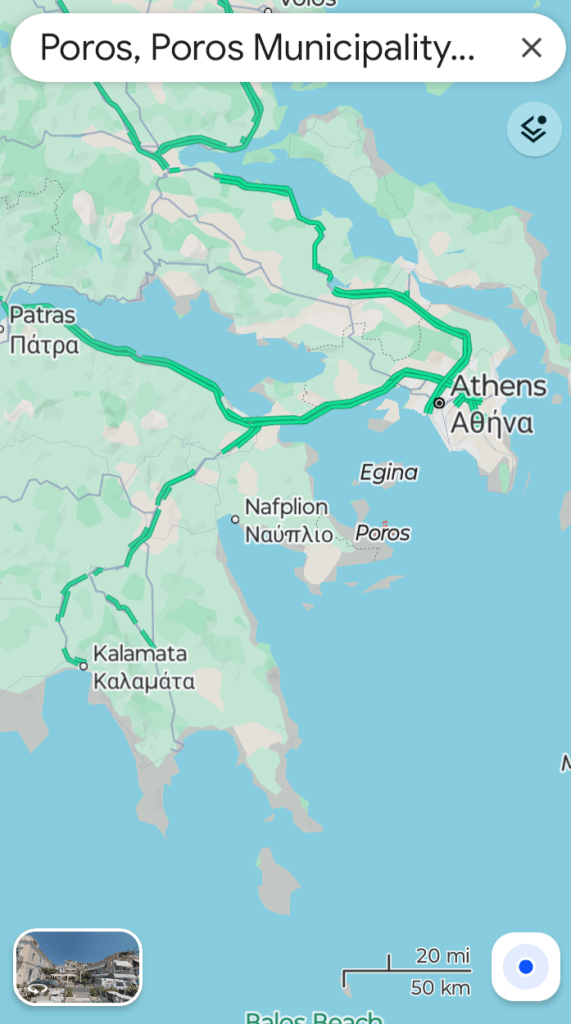
And in case you guessed Santorini (Thera), you’re wrong. Some sources say that, but Alma has said, Poros, off the southern coast of Attika, south east of the Corinth isthmus and very close to Argos. Jason’s old stomping ground.
Circe happened to be the sister of Pasiphae, mother of the Minotaur, and she poisoned the crew of Odysseus, changing them into swine. Hermes helped Odysseus resist her magic, but when Don Wanderly tells his brother that the girl he’s engaged to is a kind of Circe, he isn’t playing about; she commands an awful power and she is evil, playing games to the death of her prey unless resisted, like Odysseus and Don Wanderly. Circe lived on the fictional island of Aeaea, or mainland Italy, and there are still academics who argue over where and which it was. But, as a woman, she’s depicted as someone who can turn domestic animals into beasts. It makes sense that Straub references her in the story.
As things in the town of Millburn grow worse, the mysterious woman is connected to Alma Mobley, who vanished after Don’s brother’s death. Now she’s back as Anna Mostyn, and the group of men start being “picked off like flies” as one of them put it to an outsider who dies a grisly death later.
In the Ubisoft video game Assassin’s Creed Odyssey, the story centers on Kassandra, a mercenary living on Kephalonia. Raised by a con man named Marcos, she engaged in quests and left the island, which is considered the player’s tutorial level.
She hunts every top member of the Cult of Cosmos, who want her dead. She’s a demigod, the granddaughter of Leonidas from the 300 battle at Thermopylae.
Throughout the game, she fights in battles between Greece and Sparta, on whichever side she (the player chooses).
With Barnabas, a ship captain who owes her for saving his life, she assumes command of his ship and sails the Aegean searching for her mother while hunting the cult, breaking into the Delphic Oracle’s house and interrogating her, while often being hunted by other mercenaries. She battles the Gorgon on Lesbos (not the “end of the world,” as the Perseus story goes), slays the Minotaur on Crete, a Cyclops on Mount Olympus, and outwits a Sphinx in Beotia.
The map is huge, the quests are pretty good, and it’s all hogwash. First, there’s no real evidence of female mercenaries during the Peloponnesian War, and most Greeks and zero Spartans would hire one. Mercenaries generally did not engage in battles except alongside other mercenaries. Perikles would never allow her into one of his symposiums, Thespis wasn’t even born yet, Perikles wasn’t murdered but died of the plague, and Herakles had already taken care of the beasts she slays, including the Cretan Bull and the Boar.
You can choose to play as Alexios, her brother, or Kassandra. It’s clear that most players have chosen Alexios.
Along their odyssey, either one you choose will encounter real people from that time like Sokrates, the Two Kings, Kleon, Alkibiates, Herodotus, Hippokrates, Euripides, and many more.
To be fair, it is a great game, one of the best I’ve ever played, and the Parthenon is recreated to its glorious whole image.
There’s beautiful scenery, a dynamic day and night cycle, thunderstorms on land and sea, and the way the ship rolls or the bow slaps a wave after dropping into a trough is so realistic that I was ecstatic. Kassandra even competes in the Olympic games in Ellis, although women were not allowed to do so, but had their own competitions away from the eyes of men.
She even finds her real father, Pythagoras, in an underground, ancient chamber on Thera, still alive after more than a century. He stands at the gates of Atlantis. I don’t want to talk about that part.
Even though it’s nice to see females as main protagonists, it’s inappropriate in this setting. I fear it changes the perception of young people, and that they’ll leave history alone. I found the game made me intensely curious about real Greek history, including the myths. I wish that happened to every player.
Forget history, or change people’s interest and perception in and of it, and it is bound to be repeated.
As it is right now.
Women as Evil Predators
In a wide variety of literature, women serve as able antagonists. Where the woman in “Ghost Story” isn’t really human, but a shape shifter, a kind of circe with a lot of hatred for humans, the men think she’s a woman.
And herein lies the core theme of stories from horror to comedy:
Men are terrified of women. It does not always manifest in their behavior, but it’s there, and they don’t like it and they have to express it. Not in words, but slasher movies, novels and pornography, where “money shots” to their faces are meant to defile and humiliate them.
First, mythology, then, books and movies, and now, video games.
I don’t understand this. The first time I ever read the novel by Straub, I was so terrified that I was convinced that characters were showing up all around me.
But I didn’t have that fear of women; despite everything that my mother did, I never feared women in general. I was the weak one, and oftentimes at critical points in my life, a woman was there to help, and that still happens. So even if this fear isn’t shared by all men, it at least appears to be innate in many.
Somewhere in this is a mingle of hatred for women, which explains why so many are exclusive victims of serial killers. Hate crimes increased after Donald Trump’s first inauguration, which I think is alarming and horrible. Most often, I believe, crimes against women are committed by dysfunctional men, most of which are incels (involuntarily celibate men who lack social skills and self esteem and confidence). Some turned out to be married men; although seemingly mild at home, had unresolved issues or mental illness, and their crime cover pedophilia, rape and murder. We really don’t know all of the why, but how can anyone who is sane understand that kind of evil?
Women are also the butt of TV series crimes, and nowhere was this more true than in “Criminal Minds,” a show I simply could not watch. Mandy Patinkin grew so irritable that cast members complained. He was honest about it, saying that when he took the part, he didn’t know it would be so violent about mostly women.
But who was the show’s biggest audience?
If you said women, you’re correct, and I don’t understand why.
Two Broke Girls, and almost every other series of and prior to the 1970s got away with making women look extremely dimwitted but nice to look at. Two Broke Girls reintroduced the sexist themes but with more sexual references which are supposed to be funny. Ejaculation, oral sex, penis size and more are thrown-about as one liners that just don’t belong on network television.
Aspasia
In Greece, there’s one exception to the male-dominant history, and that’s Aspasia, consort of Perikles. He was king when the (second) Peloponnesian War started, but he died a year later from the mysterious plague of Athens.
Aspasia was the one who trained Sokrates in rhetoric and some philosophy, which is ironic, given that he and Perikles likely didn’t get along well. Without her, we wouldn’t have Sokrates (and Plato) to thank for modern philosophy and rhetoric based on logic, which cornered those he debated, and he gave no quarter.
If we only look, we can see why things are the way they are. And Athens had its walls surrounded by Spartan troops camped nearby, and it basically imprisoned farmers along with citizens who lived inside the walls, where the plague killed people at will.
They still had their navy, but as soon as the Spartans employed the Persians, their former enemy, Sparta, initially without a navy, got one. Persians were expert ship builders and seamen, so they eventually carried the day. The Port of Piraeus, the Athenians’ only source of food and supplies, was blockaded.
The aftermath of the war had city politicians on edge, angry, looking for an outlet. Sokrates was tried and executed for misleading youth, an untrue accusation, but his legacy lives on.
Contemporaries like Alkibiates didn’t do so well either. He had betrayed Athens twice, Sparta once, and was even exiled to Persia. He was assassinated in 404 BCE.
Traitors, misogynists, wars, the conquests for resources, racial hate and religious intolerance, it’s an old story. They’ve always been with us humans.
Indeed, if we pay more attention to myths, the lessons they taught, and to history itself, we would be different. Very different.
And though it’s impossible for a human-animal coupling to produce offspring, those tales still exist today, no matter how silly they are. It’s a cautionary tale. Bestiality existed long before the Hebrew bible was written. But as for the epic myths about odysseys and battles, as happened during the Trojan War, which archaeologists say there’s evidence of, those are likely based in some part on real events. War, ships blown off course, and certainly misogyny would have inspired such tales.
It is no different today. And that’s a great tragedy.
Rome would later conquer Greece, treating the polis badly but appreciating their culture and art. The Romans also kept women down.
Both empires would be overthrown, a fate which will eventually repeat itself due to today’s misogyny and murder in the West
But even if history is mostly ignored, and the caution embedded in fables and myths are ignored, there’s hope.
More women in modern times have done amazing things and they are not forgotten.
And if we get out of the mess we’re in, it will be because of women. Not women like president Trump keeps as lackeys and tokens, but women of pride, strength, honesty and courage.
They are all around us, always have been, and I wonder what history would have been like had so many women not been excluded from politics and positions of prominence.
One thing I know for certain is that I support women.
 Memoirs of an American Asshole